10 AI Trends That Will Change the Internet in 2026
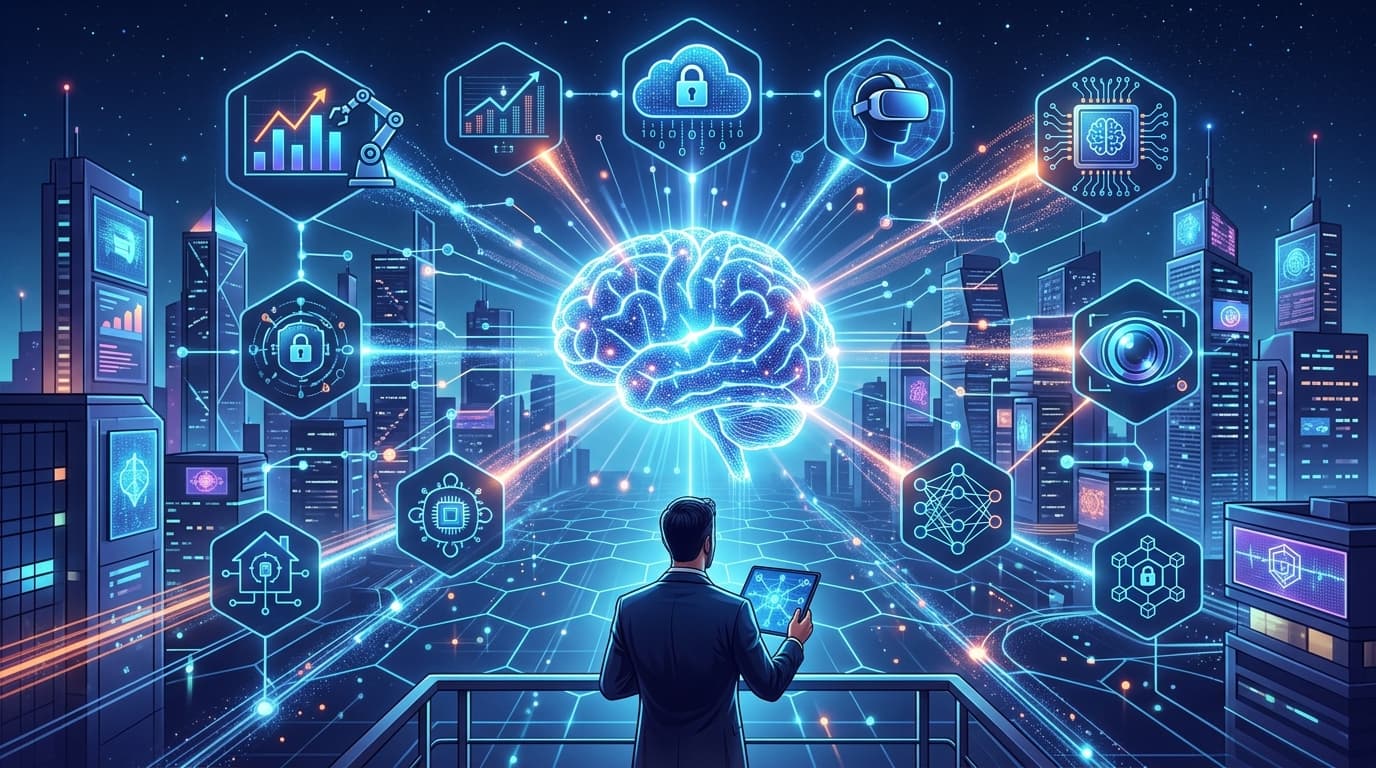
The Evolution of the Digital Frontier
As we navigate through 2026, the internet is undergoing its most significant transformation since the invention of the World Wide Web. Artificial Intelligence is no longer a futuristic concept; it is the infrastructure upon which our digital economy is built. For business leaders, investors, and everyday consumers in the United States, understanding these shifts is essential for maintaining a competitive edge in an increasingly automated marketplace.
1. Hyper-Personalized Generative Commerce
In 2026, the traditional e-commerce storefront is vanishing. Instead, AI-driven platforms act as personal shopping concierges. By analyzing real-time financial data and browsing history, these systems curate bespoke product feeds that adapt to your immediate needs, significantly increasing conversion rates for US retailers.
2. The Rise of Autonomous Financial Agents
Managing personal and business finances has become a hands-off experience. AI agents now autonomously negotiate service contracts, optimize tax filings, and manage investment portfolios based on volatile market conditions. This shift is democratizing wealth management, moving power from legacy institutions to intelligent, algorithmic assistants.
3. Semantic Search and the Death of SEO as We Knew It
The days of chasing keyword density are over. In 2026, search engines prioritize semantic intent and deep reasoning. AI models like the ones powering the latest search iterations understand the context of a query, providing direct, synthesized answers rather than a list of links. Content creators must now focus on authority and unique insight to remain visible.
4. AI-Driven Cybersecurity Defense
With cyber threats becoming more sophisticated, the internet in 2026 relies on proactive AI defense. Systems now predict attacks before they occur, utilizing predictive analytics to harden network vulnerabilities in real-time. For American enterprises, this means a massive reduction in data breaches and ransomware incidents.
5. The Proliferation of Synthetic Media
Content creation has entered the era of synthetic media. High-quality video, audio, and interactive assets are now generated in seconds. While this accelerates marketing production, it also necessitates new verification standards. In 2026, digital watermarking and blockchain-based provenance are standard requirements for all credible media outlets.
6. Edge AI and Localized Processing
To reduce latency and improve privacy, data processing is moving from centralized cloud servers to the edge. By 2026, smartphones and laptops in the US are equipped with dedicated AI hardware, allowing complex tasks to be performed locally without sending sensitive financial data to external servers.
7. Intelligent Regulatory Compliance
Navigating the complex landscape of US financial regulations is now handled by AI compliance officers. These systems monitor legislative changes in real-time, ensuring that businesses remain compliant with evolving state and federal laws. This reduces the burden on legal departments and lowers operational overhead for startups.
8. Human-AI Collaborative Workflows
The professional landscape in 2026 is defined by synergy. Rather than replacing workers, AI handles repetitive data analysis and administrative tasks, allowing human employees to focus on high-level strategy and creative problem-solving. This shift is driving a productivity surge across the US services sector.
9. Decentralized AI Governance
As AI becomes central to our digital lives, decentralized governance models are gaining traction. Using blockchain technology, stakeholders in 2026 are participating in DAOs that manage the development and deployment of open-source AI models, ensuring that the technology remains transparent and accountable to the public.
10. The Green AI Initiative
Sustainability is a core focus in 2026. Data centers are increasingly powered by renewable energy, and AI algorithms are being optimized for energy efficiency. Companies are now reporting their 'AI Carbon Footprint,' making sustainability a key metric for investors evaluating the long-term viability of tech-heavy organizations.
Conclusion: Embracing the Future
The internet of 2026 is faster, more intuitive, and increasingly secure. While these trends present challenges, they also offer unprecedented opportunities for growth and innovation. For businesses and individuals in the United States, the key to success lies in adaptability. By integrating these AI-driven trends into your daily operations and long-term financial strategy, you can position yourself at the forefront of this digital revolution. The future is not just arriving; it is already here, and it is powered by intelligent, self-optimizing systems that are fundamentally rewriting the rules of the internet economy.
Related Articles
Explore more articles you might like